

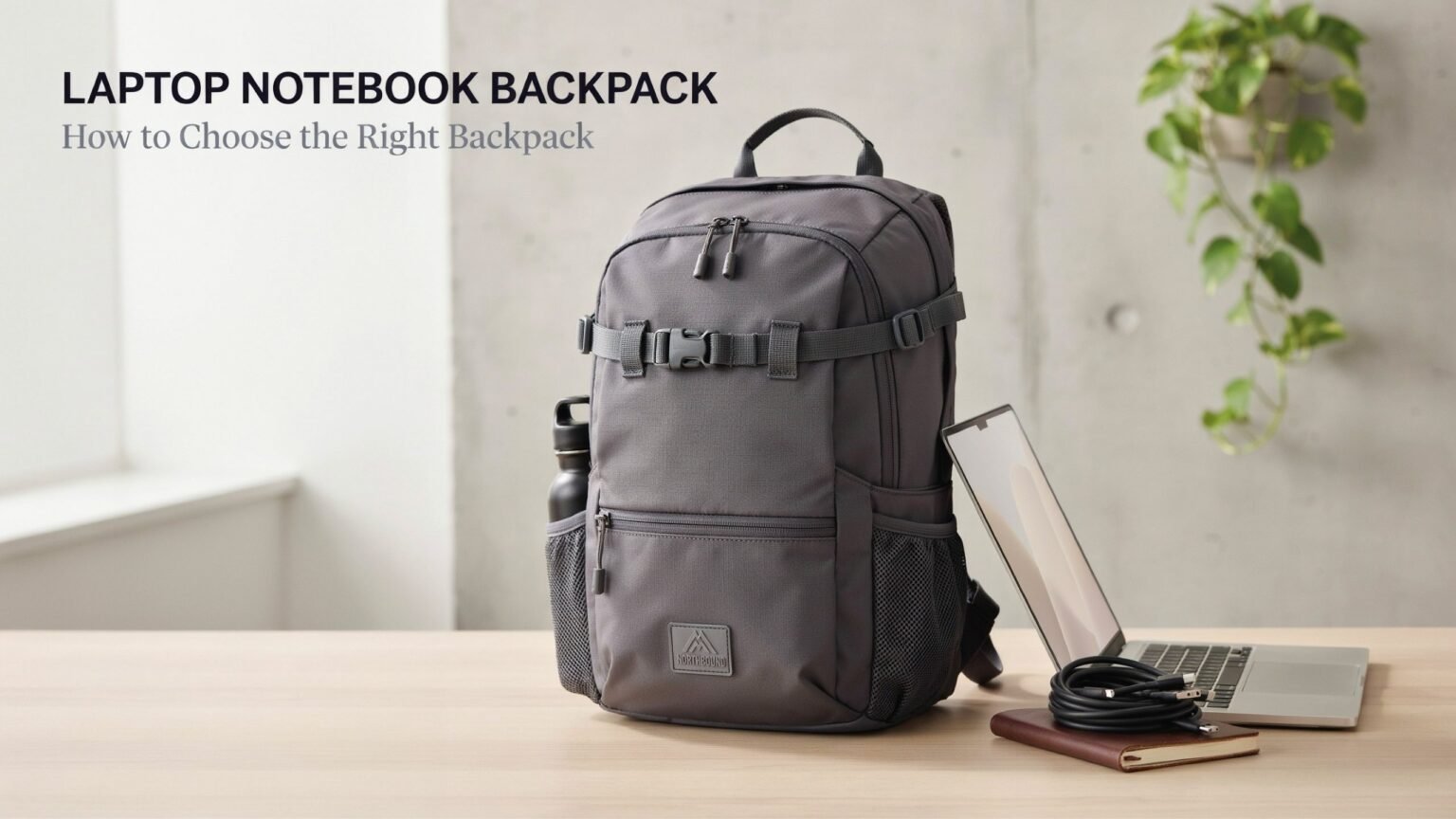

A laptop notebook backpack is more than a simple bag for carrying a computer. For students, office workers, freelancers, business travellers, and people who work remotely, a good backpack needs to protect an expensive laptop while also providing enough room for a charger, notebook, documents, headphones, mouse, water bottle, and other daily essentials. In 2026, laptop backpacks are available in many designs, materials, sizes, and price ranges, so choosing the right one requires more than simply checking whether the product says “laptop backpack.” Important factors include the laptop compartment size, padding, storage capacity, material, water resistance, shoulder straps, back support, organization, durability, and overall weight. Current buying guidance also emphasizes checking the actual dimensions of the laptop compartment rather than relying only on a label such as “15.6-inch,” because laptops with the same screen size can have different physical dimensions.
What Is a Laptop Notebook Backpack?
A laptop notebook backpack is a backpack specifically designed to carry and protect laptops or notebooks during everyday transportation. Unlike an ordinary backpack, it normally includes a dedicated padded laptop compartment that separates the computer from books, chargers, cables, and other objects. This separate section helps keep the laptop secure and reduces the chance of it moving around inside the bag. Many designs also include smaller compartments for accessories and quick-access items, making them useful for work, university, commuting, and travel. Lenovo’s current guidance identifies a dedicated padded laptop compartment as a key feature and recommends checking internal dimensions to make sure the backpack matches the device.
The term notebook backpack is often used interchangeably with laptop backpack, although manufacturers may use different terminology. Some models are designed for compact 13- or 14-inch notebooks, while larger backpacks can accommodate 15.6-, 16-, or even 17-inch devices. The important point is that the backpack should provide a secure fit rather than leaving the laptop loose inside the compartment. A correctly sized compartment, sufficient padding, and a protected base can make a significant difference when carrying a computer through a busy commute or across a university campus.
How to Choose the Right Laptop Backpack Size
Choosing the correct size is one of the most important steps when buying a laptop notebook backpack. Laptop sizes are usually advertised according to screen size, but screen size alone does not tell you the complete physical dimensions of the device. Two laptops with a 15.6-inch display can have different widths, depths, and thicknesses, particularly when comparing a thin office notebook with a larger gaming laptop. For that reason, measure your laptop and compare its width, depth, and thickness with the manufacturer’s stated compartment dimensions before purchasing.
You should also consider how much else you need to carry. A compact 15–20 litre laptop backpack may be suitable for someone carrying only a laptop, charger, notebook, and a few personal items, while a larger backpack can be more practical for students or travellers who carry clothing, books, accessories, or multiple devices. Current 2026 guidance commonly places office-oriented backpacks around the 15–25 litre range, while larger capacities provide more room for travel and heavier daily loads. The goal is not simply to buy the biggest backpack available; a bag that is unnecessarily large can become bulky and uncomfortable when it is only partially filled.
Important Laptop Backpack Features to Look For
The laptop compartment should be the first feature you examine. Look for substantial padding around the computer and, where possible, a design that keeps the laptop elevated from the bottom of the backpack. A separate compartment also prevents objects such as chargers, pens, books, or other hard items from pressing directly against the laptop. Some modern backpacks provide additional sleeves for tablets, documents, or smaller electronics, which can make the interior much easier to organize.
Storage organization is another important consideration. Useful laptop backpacks often include a main compartment, accessory pockets, zippered sections, cable organizers, and quick-access exterior pockets. This allows you to separate your charger, mouse, headphones, smartphone, keys, and documents instead of putting everything together in one large compartment. However, more pockets are not always better. Excessive organization can add weight and reduce usable space, so choose a layout that matches what you actually carry.
Material and construction also affect durability. Nylon, polyester, canvas, and coated fabrics are common materials used in laptop backpacks. Look for strong stitching, reliable zippers, reinforced areas, and a base that can handle regular contact with floors and other surfaces. A durable backpack should be able to handle everyday commuting without the straps, seams, or zipper becoming weak after a short period.
Water Resistance and Laptop Protection
Water resistance is an especially useful feature for a laptop notebook backpack because electronic devices are vulnerable to moisture. A water-resistant fabric can help protect your laptop from light rain and accidental splashes, but it is important to understand that water-resistant does not necessarily mean waterproof. The fabric may repel water while the seams and zippers remain potential entry points. Lenovo notes that water-resistant materials can help with light rain and spills, while stronger waterproof protection depends on the overall construction.
If you regularly commute in wet weather, look for additional protection such as covered zippers, water-resistant coatings, rain covers, sealed construction, or waterproof materials. A backpack designed for heavy rain may use a roll-top closure or more comprehensive weather protection. The right level depends on your environment and travel routine. For ordinary daily commuting, water-resistant material may be sufficient, while people who frequently travel through heavy rain may need more substantial protection.
Comfort, Straps and Everyday Carrying
A laptop backpack can protect your computer perfectly and still be a poor choice if it is uncomfortable to carry. When selecting a comfortable laptop backpack, pay attention to the shoulder straps, back panel, weight of the empty bag, and overall shape. Wide padded shoulder straps can distribute pressure more comfortably, while a padded or ventilated back panel can make long periods of carrying easier. Adjustable straps are important because they allow the backpack to sit correctly against your body rather than hanging too low or too far away from your back.
Weight distribution also matters when you carry several heavy items. A laptop, charger, books, water bottle, and accessories can quickly add up, so an organized backpack should keep heavier items positioned appropriately rather than allowing everything to shift to one side. Some larger travel-oriented models may also include chest or waist straps to improve stability. However, these features are not necessary for everyone. For a normal office or college commute, a lightweight backpack with good padding and adjustable straps may be more practical than a feature-heavy travel bag.
Laptop Notebook Backpack for Work, College and Travel
The best laptop notebook backpack for work may not be the same as the best backpack for a university student or frequent traveller. Office users may prefer a slim, professional design with a dedicated laptop compartment, document storage, charger organization, and enough capacity for daily essentials. A student may need more room for books, notebooks, stationery, headphones, and personal belongings. A traveller may prioritize larger capacity, stronger construction, water resistance, luggage compatibility, and quick access to electronics.
For everyday use, the ideal backpack should match your routine rather than simply offering the largest number of features. A professional who carries only a laptop and accessories may find a 15–25 litre design practical, while someone combining work with short trips may want a larger bag. Think about everything you normally carry for a typical day and choose a backpack that accommodates those items without being unnecessarily oversized.
Frequently Asked Questions About Laptop Notebook Backpacks
What is a laptop notebook backpack?
A laptop notebook backpack is a backpack designed specifically to carry a laptop or notebook computer. It normally includes a dedicated padded compartment and additional storage for accessories, documents, chargers, and everyday items.
What size laptop backpack should I buy?
Choose a backpack according to your laptop’s actual dimensions, not only its advertised screen size. Measure the width, depth, and thickness of your laptop and compare those measurements with the internal laptop compartment. Common categories include 13-inch, 14-inch, 15.6-inch, 16-inch, and 17-inch laptops.
Is a laptop backpack waterproof?
Not necessarily. Many laptop backpacks are water-resistant, meaning they can provide protection against light rain and splashes. A genuinely waterproof backpack requires stronger protection involving the material, seams, closures, and overall construction.
How much capacity should a laptop backpack have?
For everyday office use, backpacks in approximately the 15–25 litre range can provide enough room for a laptop, charger, notebook, and daily essentials. Larger capacities may be more appropriate for students, travellers, or people carrying clothing and multiple devices.
What makes a laptop backpack comfortable?
Look for padded adjustable shoulder straps, a supportive back panel, sensible weight distribution, and a reasonable empty weight. A backpack should fit comfortably against your back and should not force you to carry the load unevenly.
Is a laptop compartment really necessary?
Yes, a dedicated padded laptop compartment provides better organization and protection than simply placing a laptop inside the main compartment. It helps separate the device from chargers, books, and other objects that could press against or scratch it.
Conclusion
Choosing the right laptop notebook backpack in 2026 means looking beyond appearance and focusing on protection, comfort, size, organization, and durability. The most important features include a properly sized padded laptop compartment, suitable storage capacity, durable materials, water resistance, comfortable shoulder straps, and useful internal organization. Measuring your laptop before purchasing is particularly important because screen-size labels do not always represent the actual dimensions of the device.
Whether you need a laptop backpack for work, college, commuting, or travel, choose a design that matches your daily routine instead of simply buying the largest or most feature-packed option. A well-designed backpack can make carrying your laptop and accessories easier while providing useful protection from everyday bumps, movement, and light weather exposure. By comparing the compartment dimensions, capacity, material, padding, straps, zippers, and weather protection, you can find a durable and comfortable laptop notebook backpack that fits both your computer and your lifestyle.
